
A Guide to Choosing Luxury Upholstery Fabrics
Upholstery fabric is not simply a covering. It is the sensory surface of a room: the thing that gets touched, sat upon, leaned against, and looked at every single day, for years. It is the decision that determines how a piece of furniture feels to live with, long after the excitement of choosing it has passed. It is also, in our experience, one of the decisions most frequently made on the wrong basis. Fabric is chosen in a showroom under fluorescent light, against a white wall, away from everything it will actually need to work alongside. Or it is chosen from a swatch card, which tells you almost nothing about how the fabric will read at scale, in motion, under the light of a specific room at a specific time of day. Or it is chosen for beauty alone, without adequate thought for how the piece will be used and by whom.
This guide is an attempt to correct all of that. It covers the fabric families worth knowing, the specific brief that each room in a home tends to demand, the technical language that suppliers use and that clients should understand, and the questions you should ask before any order is placed. The goal, as always, is to make the right choice; not the most beautiful fabric in the abstract, but the most beautiful fabric for the room, the piece, and the life being lived in it.
THE FABRIC FAMILIES
Not all luxury upholstery fabrics are asking the same thing of you. They have different characters, different tolerances, and different natural homes within an interior. Understanding the major families before you begin makes every subsequent decision considerably easier.
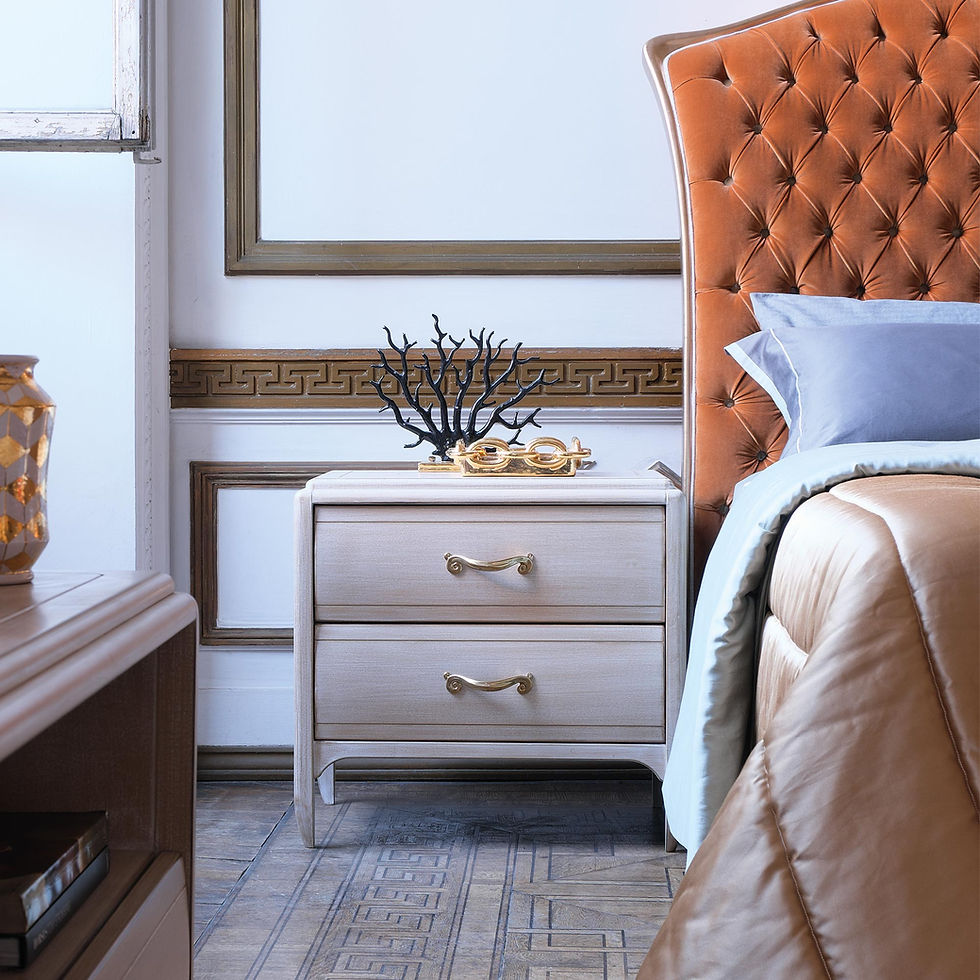
Velvet has been associated with opulence for centuries, and with good reason. Its dense pile and light-reflective surface give it a visual depth that almost no other fabric achieves. It flatters simple silhouettes particularly well, bringing richness to a clean line without complication. The concern many clients raise about velvet, that it marks easily or crushes permanently, is less relevant than it once was. Modern velvets, particularly mohair or performance blends, offer genuine durability and pile recovery when well made. Velvet belongs in formal sitting rooms, accent chairs, and statement pieces where the fabric is part of the point.
Linen is a different kind of luxury entirely. Its slightly irregular weave, the quality of quiet authenticity it carries, and the way it sits somewhere between casual and refined without quite committing to either are the things that make it so persistently desirable. Pure linen is best reserved for lower-traffic pieces or rooms that receive only moderate use. Linen blends offer enhanced durability without sacrificing the characteristic texture and feel. Linen belongs in drawing rooms with a considered aesthetic, window seats, decorative armchairs, and any piece that will be looked at almost as much as it is sat upon.
Wool is arguably the most intelligent upholstery fabric available, and one of the most underrated. It is naturally temperature-regulating, inherently flame-resistant, and built for longevity in a way that many more fashionable materials are not. Its matte finish and soft, structured texture support clean lines beautifully and age with a particular kind of dignity. Wool belongs in libraries, studies, formal dining chairs, and anywhere a fabric is expected to look as good in fifteen years as it does today.
Bouclé has become one of the defining materials of contemporary luxury interiors, and its popularity is not misplaced. The looped, tactile surface brings warmth and architectural presence in equal measure. It is especially well suited to sculptural and curved forms, emphasising shape rather than competing with it. High-quality bouclé, particularly in wool or blended versions made for premium use, offers surprisingly good durability for a fabric that is delicate. Bouclé belongs on statement sofas, curved accent chairs, and pieces where the fabric is intended to contribute meaningfully to the room's textural story.
Silk occupies a category of its own: the highest tier of upholstery materials, chosen not for practicality but for artistry and the particular quality of refinement it brings to a room. It is not a fabric for everyday use, and it should not be treated as one. Its correct applications are narrow but, within those applications, unrivalled. Silk belongs on show chairs, antique pieces that are displayed rather than used heavily, formal rooms where entertaining is occasional, and wherever the brief explicitly demands the finest thing available regardless of consequence.
Leather is timeless in the truest sense. It does not date, it does not trend, and it improves in character with age in a way that very few other materials manage. Full-grain leather in particular develops a patina over time that renders each piece genuinely unique. It is also, practically speaking, one of the most forgiving upholstery materials available: wipe-clean, resistant to everyday spills, and extraordinarily durable when properly cared for. Leather belongs in sitting rooms, studies, dining chairs, and anywhere the combination of longevity, ease of maintenance, and quiet confidence is the right brief.
Chenille delivers luxury through touch rather than appearance. Its soft, fuzzy surface is deeply inviting, and modern chenille fabrics offer significantly better durability than earlier versions of the material. It adds warmth and comfort to both modern and traditional designs without demanding attention in the way that velvet or bouclé does. Chenille belongs in living rooms, reading chairs, footstools, and any piece whose primary job is to feel extraordinary rather than to look extraordinary.
Jacquard is pattern woven directly into the textile rather than printed onto its surface. This distinction matters enormously in practice because a woven pattern has structural integrity and wears gracefully over time, fading in character rather than simply fading. Jacquard suits traditional frames, formal spaces, and clients whose interiors have a particular relationship with pattern and textile history. Therefore, jacquard belongs in drawing rooms, dining chairs in formal homes, and pieces where the fabric is intended to carry the decorative weight of the room.
THE ROOM DETERMINES THE FABRIC
The most important question when choosing upholstery fabric is not which fabric you love. It is what the room, the piece, and the life lived in it actually require. These are different questions, and answering the second tends to make the first considerably easier.
The formal sitting room or drawing room gives you the widest latitude of any upholstered space in the house. Traffic is lighter, use is more intentional, and the room's primary function is aesthetic and social rather than daily domestic. This is the room where silk, pure linen, and lightweight decorative wools are appropriate choices. These fabrics would be impractical elsewhere; here, they are exactly right. Formal fabric designs, damasks, narrow stripes, and woven jacquards suit formal rooms naturally.
The everyday living room is the most demanding brief in the house. It is the room where most of the actual living happens, and the upholstery needs to reflect that honestly. Pieces here require fabric that is tightly woven, genuinely durable, and honest about the life it will be subjected to. Performance velvets with polyester additions have become a popular choice for good reason: they are both elegant and hard-wearing. Woven wools, heavier linens, and blended fabrics in the 15,000 Martindale rubs range and above are the appropriate territory. The worst mistake in a living room is choosing a fabric that you are afraid to actually use.
The dining room has a specific and slightly unforgiving brief: a fabric that must tolerate food and drink in close proximity, the particular abrasion of being sat upon and stood up from multiple times at each meal, and the practical reality that dining chairs get wiped down rather than professionally cleaned. Leather is a very strong choice for exactly these reasons. Performance velvet is another because the tight pile resists staining, it brushes clean easily, and it looks considerably more refined than the alternatives at the same durability level. A formal dining room used occasionally can extend to more decorative fabric choices; a kitchen dining area cannot.
The bedroom opens up possibilities. An armchair in the corner of a bedroom, a window seat, a headboard, a chaise at the foot of the bed: none of these receive the wear that sitting room or dining room furniture does. This is where pure linen, delicate wool, and even silk become genuinely viable, not because the bedroom is where you would put beautiful fabric if you had nowhere else for it, but because the reduced wear changes what the fabric needs to do. The bedroom is also the room where sensory qualities, the way a fabric feels to the touch, matter most. Prioritise texture and material integrity here.
The library or study has its own aesthetic logic. It is a room built around patience, quality, and the long view. Fabrics that age well and carry a sense of permanence suit it: wool, tweed, and fine leather. Bright colours and fashionable patterns tend to work against the atmosphere of a good library. Fabrics that look as though they have always been there, and always will be, tend to work for it.
UNDERSTANDING DURABILITY: THE MARTINDALE TEST
This is the piece of technical knowledge that every client should carry into any conversation with a supplier, because it is the metric by which fabric durability is measured and discussed in the industry, and it translates directly into how a fabric will perform in your home.
In the UK and Europe, the standard method for testing upholstery fabric durability is the Martindale Test. A fabric sample is placed in a machine that rubs it against a test surface in a figure-of-eight motion, continuing until two yarns break or the fabric shows visible wear. The resulting number, expressed in Martindale cycles, tells you how many times the fabric can be subjected to that motion before deteriorating. The higher the number, the more durable the fabric.
As a working guide: under 10,000 cycles is decorative use only and should not be applied to seating. Between 10,000 and 15,000 cycles suits occasional seating in low-traffic rooms. Between 15,000 and 25,000 cycles covers general residential daily use on most sofas, chairs, and dining furniture. Above 25,000 cycles moves into territory suitable for high-traffic households, families with children, and pieces that receive genuinely intensive daily use. To put 15,000 cycles into terms that mean something: a fabric at that rating, used by someone sitting on the piece four times a day every day, would not show signs of wear for over ten years. Most well-chosen residential fabrics in the 15,000 to 25,000 range are entirely appropriate for normal domestic use.
There are two important caveats you should understand. First, the Martindale count is not the only factor in real-world durability. A delicate natural linen with a Martindale count of 25,000 will still wear more quickly in practice than a tightly woven synthetic blend at the same count, because fibre type, weave density, and finishing all contribute to how a fabric actually ages in use. The number gives you a starting point; it does not tell the whole story. Second, the thing that ages fabric most reliably is not use but lack of care. Accumulated dust, unaddressed spills, and irregular cleaning do more damage over time than the regular, careful occupation of a well-chosen piece.
PATTERN, SCALE, AND THE RELATIONSHIP BETWEEN FABRIC AND FORM
Fabric and furniture should be chosen in relationship to each other rather than sequentially. A fabric that is perfect in isolation may be entirely wrong for the frame it is applied to, and the frame may in turn be either emphasised or undermined by the fabric choice. The most fundamental rule of scale is that pattern should be proportionate to the piece it covers, and both should be proportionate to the room they occupy. A large pattern repeat on a small accent chair overwhelms the furniture and makes the room feel confused. A small, tight pattern on a large sofa looks like texture at normal viewing distance, which may be exactly the intention or may simply be a wasted opportunity, depending on what the room needs. Before committing to a patterned fabric, understand the repeat size and consider how it will look at scale, not from a sample but from the other side of the room.
A pattern repeat also has practical implications that are easy to overlook until the order has been placed. A large repeat requires significantly more fabric than a plain or small repeat, because the upholsterer must match the pattern across seams, across the back and seat and arms of the same piece, and across multiple chairs in a set. This additional yardage adds cost, and it should be factored into the budget at the outset rather than discovered later.
There is a strong argument, particularly for principal pieces, for choosing a solid or subtly textured fabric and introducing pattern through cushions, throws, and smaller accent pieces. It provides more flexibility: cushions can be changed as the room evolves, the palette can shift with relative ease, and the principal piece remains relevant over a longer period. On secondary and accent furniture, pattern can be considerably bolder. An armchair, an ottoman, or a window seat can carry a fabric that a sofa cannot.
The difference between woven and printed patterns should be understood clearly. A woven pattern, as in jacquard or damask, is built into the structure of the textile. The pattern has integrity at every layer of the fabric and will wear gracefully over time. A printed pattern sits on the surface of the base fabric. It can fade, crack, or rub away under sustained use in a way that a woven pattern does not. For any piece that will be used regularly, a woven pattern is the more ideal investment.
COLOUR, LIGHT, AND THE SAMPLE LIST
The most important rule in choosing upholstery fabric colour is one that cannot be stated firmly enough: never make a final decision from a swatch card alone. Always request a proper cutting, bring it into the room, and live with it against the specific walls, floor, and light of the actual space before committing.
Light changes fabric. A colour that looks warm and inviting under showroom lighting may appear cooler, flatter, or entirely different under the natural light of a north-facing room in December. Conversely, a fabric that seems unremarkable on a card may come alive in the afternoon sun of a south-facing sitting room. Evaluate samples in the morning, at midday, and in the evening, and under both natural and artificial light. The full range of what the fabric will actually look like in daily use is visible only across that arc. Velvet requires particular attention in this regard. The pile direction has a dramatic effect on how velvet reads: viewed with the pile, it appears lighter; viewed against it, it appears darker and deeper. Always evaluate velvet samples upright and at an angle, as they will sit when upholstered, rather than flat on a table.
On colour choice and practical reality: lighter fabrics create an airy, expansive feeling and tend to look more refined in their handling of pattern and texture. They are also considerably less forgiving of marks, spills, and the general evidence of daily life. Darker colours and mid-tones are more practical but require a room with sufficient light to carry them without feeling heavy. The most forgiving choices for principal pieces, those that need to remain fresh and relevant over many years, tend to be warm neutrals, muted tones, and classic natural colours that have no particular relationship to any given moment in time.
Fade resistance is a specification that is easy to overlook and painful to regret. Any piece placed in direct or strong natural light requires a fabric that is genuinely colourfast. Solution-dyed and UV-resistant fabrics retain their colour significantly better than surface-dyed alternatives. For south-facing rooms, conservatories, and any space with sustained direct sunlight, this is not a nice-to-have. It is a requirement.
QUESTIONS TO ASK EVERY SUPPLIER
A reputable supplier should welcome these questions. A supplier who is reluctant to answer them clearly is a supplier worth being cautious about.
What is the Martindale rub count for this fabric, and has it been independently tested? Suppliers who cannot provide this figure, or who give it in terms that cannot be verified, are not giving you the information you need to make an informed decision.
What is the fibre content, and in what proportion? A fabric described as a linen blend may be ninety percent polyester. Understanding the actual composition tells you how the fabric will feel, how it will age, and how it will respond to cleaning.
What are the care requirements? Can it be spot-cleaned with water, or does it require a specialist cleaner? Are there products that should be avoided? What happens if it gets wet? These are not hypothetical questions when the fabric is going on a dining chair or a family sitting room sofa.
Is there a pattern repeat, and how much additional fabric should be allowed for matching? This affects both the yardage required and therefore the total cost. Establish it before the order is placed, not after.
Does the fabric meet fire safety regulations? For upholstered furniture in a domestic setting, this is a legal requirement. For bespoke or reupholstered pieces in particular, ensure that the supplier can confirm compliance and provide documentation if needed.
Is the fabric prone to pilling, fading, or pile-crushing over time? No supplier will tell you a fabric is poor, but asking how a fabric ages in real domestic use, and whether they have experience of it in comparable applications, reveals a great deal about both the material and the supplier's honesty.
What is the full fabric width, and will seams be required on this piece? Where seams fall on an upholstered piece matters aesthetically. Understand this in advance.
Is this a continuing line or a seasonal collection? For large projects, or any project where additional fabric might be needed at a later date, knowing whether the fabric can be reordered is important information.
What is the lead time once ordered? Fabric for bespoke upholstery is rarely held in stock in quantity. Understand the timeline before committing to a project schedule.
Can you show me this fabric as it appears on a finished upholstered piece, rather than as a flat swatch? The difference between fabric on a roll and fabric stretched over a form, padded, sewn, and placed in a room, is significant. Any supplier with genuine experience of their fabrics in use should be able to show you relevant examples.

The best upholstery fabric is not the most beautiful one in the abstract. It is the most beautiful one that is also genuinely right for the room, for the piece, for the people who will live with it, and for the years ahead. The hierarchy of the decision, when stated plainly, is this: understand the use first, establish the required durability second, and then choose the most beautiful fabric that satisfies both. This is not a constraint on the aesthetic outcome. It is the condition that makes the aesthetic outcome last.
The chairs and sofas and window seats that endure, the ones that still look right in twenty years and feel better than they did on the first day, are almost always the ones where someone made these choices in exactly this order. Not because the most beautiful fabric was sacrificed, but because the most beautiful fabric was chosen with full knowledge of what it was being asked to do. If you are currently in the process of choosing, and any of the questions in this guide feel difficult to answer without seeing the fabric in context, request samples. No supplier worth working with will hesitate to send them, and the decision is too significant, and too lasting, to make from a photograph alone.

Comments