
When Walls Become Art: Alternatives to Paint in Luxury Interiors
- James O
- Nov 12, 2025
- 5 min read
In luxury interior design, walls are no longer treated as mere backdrops. They have evolved into dynamic canvases that also define a room’s mood, texture, and architectural character. The modern approach to wall design celebrates depth, tactility, and craftsmanship, transforming surfaces into works of art that shape the entire spatial experience. Paint, once the go-to solution, is now being replaced or complemented by materials such as plaster, panelling, moulding, and decorative inlays that offer timeless elegance and individuality.
FROM BACKDROP TO FOCAL POINT: THE EVOLVING ROLE OF WALLS
Historically, walls have always played an expressive role in architecture. In grand European estates, frescoes and intricate plaster reliefs told stories of heritage and artistry. French boiserie, with its carved panels and gilded trims, created a sense of grandeur and permanence. In today’s luxury homes, the same design philosophy is re-emerging but through contemporary forms and techniques.
Modern technology and craftsmanship have allowed designers to revisit traditional methods with a refined touch. For instance, artisanal plaster finishes now replace synthetic paints to achieve natural texture and movement. Panelling and moulding, once associated with classical interiors, are being adapted for minimalist and contemporary spaces to introduce structure and rhythm. This renewed attention to material and craft has redefined the wall as a statement piece rather than a supporting element.
THE APPEAL OF ALTERNATIVE WALL TREATMENTS
Luxury design values emotional connection and sensory experience. Alternative wall finishes offer qualities that go beyond aesthetics: they influence how light interacts with space, how surfaces feel to the touch, and how a room’s atmosphere evolves throughout the day. A few reasons designers are moving away from just plain paint include:
Depth and Texture: Paint provides colour but could lack dimensionality. Plasters, panels, and inlays bring tactile interest, reflecting light differently and creating visual movement across a surface.
Uniqueness: Many artisanal wall finishes are hand-applied or custom-designed, making each wall truly one of a kind.
Longevity: High-quality materials, such as lime plaster or stone, age gracefully and often require less frequent maintenance than paint.
Environmental Sensibility: Natural materials have sustainable and non-toxic properties, aligning with the growing demand for healthier, eco-conscious luxury interiors.
Ultimately, alternative wall finishes offer an opportunity to express personality, craftsmanship, and sophistication, all of which define true luxury.
PLASTER FINISHES
Few materials embody quiet luxury like plaster. From the velvety smoothness of Venetian plaster to the organic irregularities of limewash and clay, these finishes introduce depth and warmth that paint simply cannot match.
Venetian Plaster: A timeless favourite in luxury homes, Venetian plaster is made from marble dust and lime, polished to a smooth, luminous finish. It creates a surface that glows under natural or artificial light and adds an air of understated opulence.
Limewash: Limewash has a chalky, matte appearance that feels both rustic and sophisticated. Its natural mineral composition allows the walls to breathe, helping regulate humidity while adding an authentic, hand-crafted charm.
Microcement and Clay Plaster: These modern alternatives are perfect for contemporary luxury interiors. Microcement offers a seamless, continuous surface ideal for bathrooms or open-plan spaces, while clay plaster brings warmth and environmental benefits through its natural, toxin-free composition.
The appeal of plaster lies in its tactile nature. It’s not just seen — it is felt. Its imperfections become its beauty, and its finish evolves gracefully over time.
ARCHITECTURAL MOULDINGS AND CLASSIC DETAILING
Mouldings and trims have long been associated with traditional design, but they remain one of the most versatile ways to add depth and definition to luxury interiors. The art lies in balance: thoughtful use of detailing can elevate a wall without overwhelming it.
In classical interiors, features like cornices, dado rails, and picture mouldings create rhythm and hierarchy. They can frame wall panels, highlight architectural proportions, or draw the eye upward to emphasise ceiling height. In modern spaces, simpler, more linear profiles can achieve a contemporary take on this timeless craft.
Designers are also experimenting with finishes. Painted mouldings in the same tone as the wall can create subtle shadow play, while metallic leaf or lacquered finishes introduce a layer of refined glamour. Regardless of style, moulding brings structure, craftsmanship, and historical continuity to luxury aesthetics.
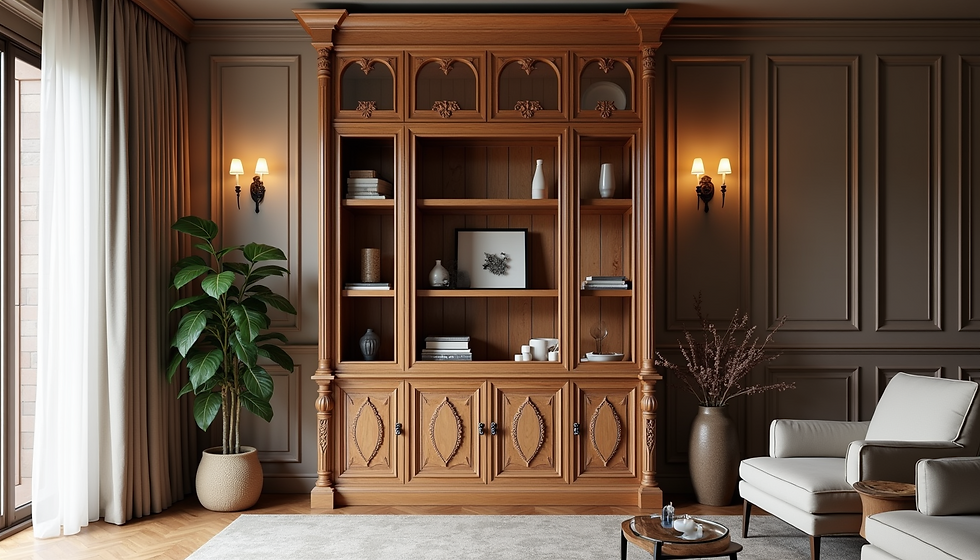
PANELLING AS ARCHITECTURAL ART
Wall panelling has evolved far beyond its origins as insulation or protection for walls. Today, it is used as an architectural and decorative feature that defines the tone of a space.
Timber and Veneer Panels: Natural wood panels offer warmth, texture, and richness. Oak, walnut, or eucalyptus veneers introduce organic depth, and when applied vertically or horizontally, they subtly influence a room’s proportions.
Lacquered or Mirrored Panels: These add a contemporary touch, enhancing light and spatial illusion. High-gloss lacquer panels are often used in modern luxury settings for their sleek, reflective quality.
Fabric and Acoustic Panels: In media rooms or bedrooms, padded or upholstered panels bring comfort and improve acoustics, proving that beauty can also be functional.
3D and Sculptural Panels: Advances in manufacturing allow for sculpted designs — waves, ribs, or geometric patterns — that transform walls into tactile art installations.
Properly executed, panelling anchors a room. It lends gravitas, softens acoustics, and provides visual layering that enriches the overall design composition.
INLAYS AND MATERIAL FUSION
For those seeking to introduce a statement of artistry and refinement, inlays offer a means of blending materials into walls with precision and elegance.
Metallic inlays — brass, bronze, or steel — can outline geometric panels or accentuate architectural lines. They provide subtle glints of luxury without resorting to overt ornamentation. Stone or marble inlays, meanwhile, create contrast and sophistication, especially in entrance halls or dining rooms.
Combining materials such as plaster with metal or stone allows for a harmonious dialogue between texture and tone. The best results come when restraint is exercised: the most luxurious walls rarely shout. Instead, they whisper with impeccable detail and deliberate composition.
LIGHTING AND SPATIAL INTEGRATION
Lighting transforms wall treatments from beautiful to breathtaking. Every texture, material, and detail reacts differently under light. A Venetian plaster wall can shimmer softly under grazing light, while a fluted timber panel can create shadows that shift throughout the day.
In luxury interiors, lighting is intentionally layered. Concealed LEDs or wall washers highlight the material’s depth, while accent lights draw attention to key features or artworks. Integrating lighting into the wall design itself — behind panels, within moulding lines, or around inlays — enhances dimensionality and brings the wall to life.
The relationship between light and surface should always be part of the design conversation from the beginning. It determines how the material will be perceived, ensuring every detail contributes to a cohesive, immersive atmosphere.
DESIGNING WITH INTENTION: BALANCE, SCALE, AND STYLE
When transforming walls into art, proportion and restraint are critical. Luxury design is defined not by excess but by precision. Each material must complement the architecture, furnishings, and natural light of the space. Overuse of texture or ornamentation can feel heavy, but thoughtful juxtaposition creates sophistication through contrast.
Scale is equally important. Moulding dimensions, panel proportions, or inlay lines should correspond to the room’s height and volume. A designer’s task is to achieve harmony, by making every wall treatment feel purposeful and seamlessly integrated rather than applied decoratively.

When walls become art, they redefine what it means to live with beauty. The most exquisite interiors today are not driven by colour trends but by a celebration of material, craft, and form. Whether achieved through polished plaster, intricate moulding, elegant panelling, or subtle inlays, these treatments speak of refinement and intention.


Comments